

Ataraxia, UnFuckWithable!
Ataraxia! Being UnFuckWithable.

Gossip Girls
Thank you Lucy, Amber, Amy and Jackie!!!! what did you call people that simply believe what ever you say? Followers?? Tools??? I really appreciated all your help around the studio. This is the best advertisement! Good Job! We will have a family reunion and laugh about this around the kiln. The internet feeds on this stuff! Yes, there is more!! Feel free to shop around. www.firegallery.art https://freename.io/discover/glb GET YOUR DOMAIN ON .GLB The glb top-level domain (TLD) is a versatile and modern namespace designed for global businesses, brands, and individuals seeking a universal online presence. Its simplicity and global connotation make it a perfect choice for entities aiming to establish an international footprint without being tied to a specific geographical location. The glb TLD offers a memorable and impactful domain that stands out in a crowded digital landscape, appealing to a wide range of users worldwide.

GO GLOBAL
https://freename.io/discover/glb GET YOUR DOMAIN ON .GLB The glb (Global) top-level domain (TLD) is a versatile and modern namespace designed for global businesses, brands, and individuals seeking a universal online presence. Its simplicity and global connotation make it a perfect choice for entities aiming to establish an international footprint without being tied to a specific geographical location. The glb TLD offers a memorable and impactful domain that stands out in a crowded digital landscape, appealing to a wide range of users worldwide. Go Global!
Pottery Date Night
Pottery Class: Date Night Five Star Review! This experience is amazing! The instructor was fully informed on the topic! Made everybody feel comfortable with understanding, clay for the first time!
Glass Blowing Friday Session at The Fire Gallery
Welcome to The Fire Gallery, where every Wednesday and Friday, we host Glass Blowing sessions that bring art and science together in a fiery dance. Whether you’re a seasoned artist or a curious beginner, our sessions offer an exciting opportunity to learn and create glass pieces. Today, we’ll take you through the glass blowing process, step-by-step, with photos from our latest session. Step 1: Gathering the Glass The process begins with gathering molten glass from the furnace. The furnace operates at temperatures exceeding 2,000°F (1,093°C), turning raw glass into a glowing, malleable state. Using a long metal pipe, the glass blower carefully dips the pipe into the molten glass, rotating it to gather a small blob of glass on the end. Step 2: Shaping the Glass Once the glass is gathered, the blower shapes it by rolling it on a metal table called a marver. This step cools the outer layer slightly and shapes the initial gather. The blower must work quickly and precisely to maintain the desired form. Step 3: Blowing the Glass After shaping, the blower starts inflating the glass by blowing through the pipe. This creates a hollow bubble in the center of the gather. By alternating between blowing and shaping, the artist gradually expands the glass into the desired shape. Step 4: Reheating As the glass cools and becomes less pliable, it must be reheated in a glory hole—a high-temperature furnace designed for this purpose. Reheating allows the glassblower to continue shaping the piece without it cracking or becoming too rigid. Step 5: Adding Details With the main shape established, finer details can be added. This might involve using tools to sculpt the glass, adding colored glass for patterns, or shaping the piece further. This step showcases the artist’s skill and creativity, as each piece begins to take on its unique character. Step 6: Cooling Down Once the glass piece is complete, it must cool down slowly in a controlled environment to prevent cracking. The piece is placed in an annealer, a type of kiln that gradually reduces the temperature over several hours or even days, depending on the size and thickness of the glass. Come Join Us! Glass blowing is an art form that requires patience, precision, and a steady hand. At The Fire Gallery, our Friday sessions are a fantastic way to experience this craft firsthand. Whether you’re creating a simple ornament or something more complex, the process is both challenging and rewarding. We hope this overview inspires you to join us and create your own glass masterpiece. Sign up for a class
Crystal Visions: Unveiling the Mysteries of Our First Crystal Lab
The recent crystal firing presented both surprises and learning opportunities. Two crystal pieces showcased larger crystal formations. We experimented with a new firing schedule, which could be one reason why some crystals did not form—another possible factor being insufficient glaze application. Our members’ pieces had a failure to launch, some variables include the Clay body used. I typically employ Cinco Blanco, a cone 5/6 clay body by Armadillo Clay in Austin, TX. In contrast, other members used reclaimed clay and a buff cone 10 clay body. One of the partially successful glazes I tested in this session was the cone 9 crystal base recipe #11, which incorporated black copper oxide, lithium carbonate, and cobalt carbonate. It appeared that these pieces were not glazed heavily enough. On the angular lamp base pictured above, some crystals formed effectively where the glaze was most generously applied, allowing a thick enough layer for the crystals to develop. On another altered thrown form, smaller, incomplete crystals appeared on the upper band where the glaze was thickest. Crystals also formed at the base of the piece, where the glaze accumulated and in the dips of the form, creating a small river of crystals that crested over the form like a miniature waterfall. Crystal Glaze Successes Two of the pieces that exhibited the most impressive crystal growth came from a recipe I discovered on Glazy. The glaze features a pale yet vibrant green background with crystals that have a metallic bronze tone. My personal favorite is a small vase with the same green backdrop but with subtle variations in the light and dark spots where microcrystals begin to resemble moss and lichens on rocks. The bronze, almost splotchy crystals give off an antique vibe. My favorite detail is the center of a crystal formation that resembles a flower with a leaf and stem. Lessons Learned This time, we strategically employed cookies and seashells to protect the kiln shelves and minimize glaze runoff—though not without some challenges. As you can see in the picture, our efforts were somewhat successful, but the kiln shelves still endured a bit of wear. Fortunately, thanks to our use of kiln wash and a bit of diligent work with an angle grinder, we managed to clean them up nicely. Now, let’s discuss the lessons learned and the measures we plan to implement to prevent similar issues in the future. One major adjustment will be making larger cookies or catchers to better handle the glaze runoff and shield our kiln shelves more effectively. This adjustment should help us maintain the integrity of our shelves and improve the overall results of our firings. All in all, it was a great learning experience, and we are excited to continue exploring, testing, and learning new things. Each firing brings its own set of challenges and discoveries, fueling our passion for ceramics and enriching our collective expertise. We look forward to more experiments and sharing our findings with the community as we further our craft! See you at the next Crystal Lab -Trey Morgan P.S. Want to take a class and learn more about glazing check out our Glaze Class
Tea Pot Worshop
Learn how to make a tea pot on a potter’s wheel.
Introduction to Tea Pots
Join Sabine Triplett at
Fire Gallery
For a two-day workshop learning how to make a tea pot on the pottery wheel
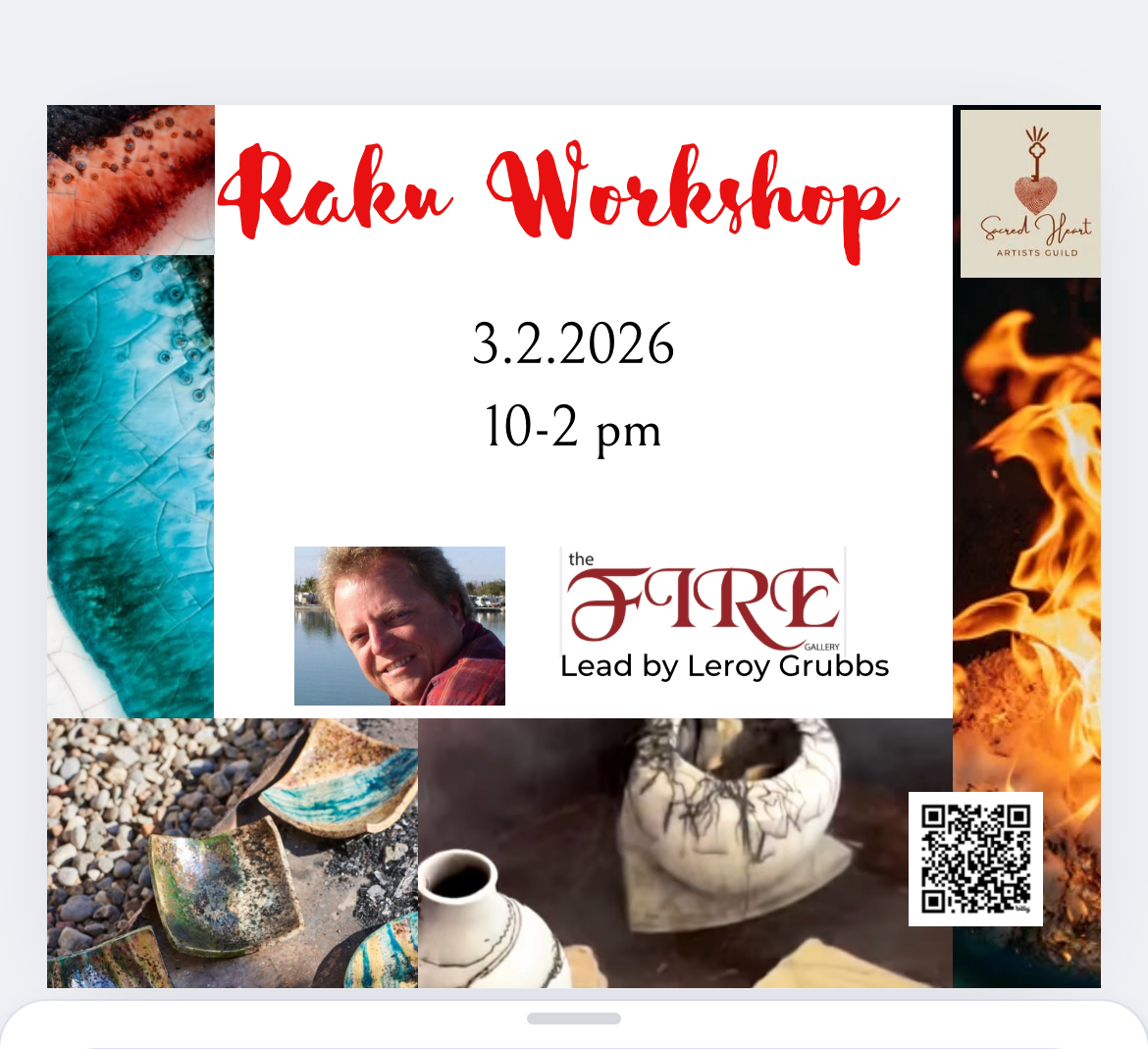
Raku Firing: A Dance with Fire
Raku firing, a technique developed in 16th-century Japan, is renowned for its dramatic and unpredictable results. The process involves removing pottery from the kiln while at bright red heat and placing it into materials that ignite, creating intense reductions that lead to stunning, often iridescent finishes. Each piece emerges as a unique work of art, marked by the thrilling unpredictability of the raku process The Historical Roots of Raku The Raku technique has its origins in Japan, developed during the Momoyama period (1568-1600). It was initially associated with the Japanese tea ceremony, emphasizing simplicity and naturalness. The term “Raku” translates to “enjoyment,” “comfort,” or “ease” and is derived from the personal seal of Chōjirō, the first Raku potter, who was commissioned by Sen no Rikyū, a historical figure in the Japanese tea ceremony. Over centuries, Raku has evolved but retains its essence of embracing the beauty found in natural imperfections. Understanding the Raku Firing Process The Raku firing process is what truly sets this technique apart. Unlike traditional pottery firing that allows pieces to slowly cool inside the kiln, pieces are removed while hot. Here’s a closer look at the firing process: The Artistic Appeal of Raku What makes Raku firing so appealing is the element of unpredictability and the distinctive results it produces. The rapid heating and cooling, combined with the reduction process, create unique effects on the glaze. The lack of oxygen causes the metals in the glaze to react, leading to vibrant colors and patterns. The crackle finishes, metallic lusters, and areas of unglazed clay that take on a smoked appearance are hallmarks of Raku pottery. Why Each Raku Piece is Unique No two Raku pieces are ever the same. The combination of the glaze, the specific conditions of the firing, and the reduction process means that each piece of Raku pottery is a one-of-a-kind work of art. This uniqueness is a large part of Raku’s charm and appeal. Collectors and enthusiasts treasure Raku ceramics for their beauty and the singular moment of creation they represent. Raku firing, with its roots deeply embedded in Japanese tradition, continues to fascinate and inspire potters worldwide. Its unpredictable nature is a reminder of the beauty in imperfection and the transformative power of fire. Whether you’re a seasoned ceramicist or an admirer of pottery, the dance of Raku firing is a captivating spectacle that bridges history, art, and the elemental forces of nature. Safety Reminder: While exploring the beautiful and unpredictable world of Raku firing, it’s crucial to prioritize safety. Raku firing involves working with high temperatures, combustible materials, and rapid temperature changes that can be hazardous if proper precautions are not taken. Here are some essential safety tips to keep in mind: Stay tuned for our upcoming events and workshops where you can learn more about various pottery techniques and styles. Don’t forget To sign-up for next month’s Raku Firing! Until then, keep creating and stay inspired! -Trey Morgan For further reading and resources on Raku, visit Ceramic Arts Network
The News HBIDA Dyslexia Art Contest
The News is information and news that fits here because it is News Worthy. For instance I really like this information. Click here for more information: https://files.constantcontact.com/cc011898001/ff5fe102-7aa2-4224-b0c1-291533803538.pdf?rdr=true